Resources
The due-diligence pack for the committee that has to sign off.
Everything a WHS lead, board committee or procurement team needs to evaluate Simpatico: the regulatory context, the clinical framework, the governance boundaries, and a real deployment. Written to be forwarded, not just read.
What's in the pack
Four things a committee asks for.
Regulatory context
What changed, when it became enforceable, and where the duty sits.
Clinical framework
The evidence base, the SBIRT model, and who governs the clinical surface.
Governance boundaries
The assistive-not-clinical line, encoded, and how data is handled.
Deployment evidence
A real deployment: She's A Crowd. What was observed, and what it means.
Regulatory explainer
Psychosocial hazards are now WHS hazards.
Across Australian jurisdictions, model WHS regulations now require duty holders to identify and control psychosocial hazards with the same rigour as physical ones. The expectation is documented risk management, not good intentions.
For a committee, the practical question is evidentiary: if an inspector asks what you knew and what you did, what can you actually produce?
The duty, in four points
Identify
Recognise the 14 psychosocial hazards present in your workforce.
Assess
Understand where risk is concentrated, by cohort, site and role.
Control
Act on it, and route workers to support before harm escalates.
Evidence
Keep records a regulator will accept: what you knew, and when.
+95.5%
growth in serious psychological injury claims, 2023–24, the fastest-growing category of workplace injury (Safe Work Australia)
12%
of all serious claims are now mental health conditions, the highest share on record; the 2030 doubling was reached in 2024
14
psychosocial hazards identified in the Safe Work Australia model Code of Practice. A duty holder is expected to identify and control them
Sources: Safe Work Australia, Key WHS Statistics Australia 2025 · Productivity Commission, Mental Health (2020)
Why this matters for claims
Return to work: the hidden mental health risk.
Employees off work may be least able, and least willing, to disclose early psychological distress. Low-stigma support reduces that risk.
3× longer
Psychological injury claims last over three times longer than physical claims, significantly increasing total claim cost.
Up to 45%
of physical injury claims develop secondary mental health conditions, compounding duration and cost.
54%
Secondary psychological injury claims progress to common law at far higher rates than physical injury claims.
Sources: Safe Work Australia · Monash University / SWA secondary psychological injury research · Queensland Workers' Compensation Scheme Review 2023
Clinical framework
Evidence-based, safe, and bounded.
Simpatico is built on established clinical models, and governed by a clinical psychologist. It guides; it never diagnoses.
SBIRT
Screen · Brief intervention · Refer to treatment
The internationally recognised early-intervention model Simpatico is structured around, meeting people before crisis.
Mrazek & Haggerty spectrum
Prevention → early intervention → treatment
Places early intervention at the pivot where a small, timely nudge prevents a larger, costlier one later.
14 recognised hazards
The WHS psychosocial taxonomy
Every interaction is mapped to the hazard framework regulators, boards and auditors already use.
Governance boundaries
Assistive. Not clinical.
The boundary isn't a disclaimer. It's the design. AI is constrained to early help-seeking, inside defined governance limits.
Inside the boundary
- Explicit purpose limitation: engagement and navigation only
- De-identified data by default
- Pattern analysis across aggregated responses
- Signposting to existing human support pathways
- Human-in-the-loop on every escalation
Outside the boundary
- Clinical judgement or diagnosis
- Automated decisions about individuals
- Individual-level assessment
- Determining compliance status
- Replacing human clinical care
Case study
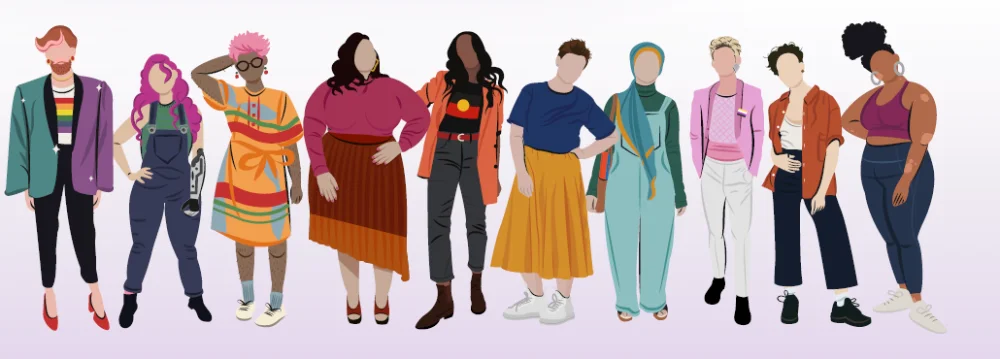
She's A Crowd: reaching people who never had support.
A data-driven tech startup partnered with Simpatico to create a mental health chatbot for survivors of gender-based violence. It reached people who had never disclosed to anyone: no helpline, no service, no formal report. Anonymous, always available, and free of the barriers that keep the most affected people silent.
5–6×
higher engagement vs a traditional EAP, across three Australian pilots, 2026
9,500+
unique support conversations across Simpatico pilot deployments
94%
satisfaction in a high-sensitivity, high-stigma deployment with mandatory anonymity
3×
more hidden distress disclosed (USC / US Defence research, comparable AI-supported deployments)
Engagement and satisfaction figures: observed in Simpatico's 2026 Australian pilot cohorts. Disclosure research (3×): USC / US Department of Defense studies of comparable AI-supported deployments. Methodology available on request.
 ×
×


“The insights gained from Simpatico are invaluable to She's A Crowd's work in tackling complex issues, generating lasting change, and developing a safer real and digital world.”
Clinical oversight
Clinical sign-off is a gate, not a title.
Dr Simon Kinsella, Co-Founder & Chief Science Officer, chairs the Clinical Advisory Group. It reviews conversational design, escalation thresholds, and every material model update. Clinical approval is a required gate in the release process.
Release gate
In the news
The Australian
Simpatico Teams launch: national coverage of the world-first AI workplace mental health tool
Read coverageITBrief
Mesh Ai debuts Simpatico Teams, an AI-powered Australian first
Read coverageEMHIC Global
Case study: the world's first AI-driven mental health platform for Microsoft Teams and 365
Read coverageFurther reading
Insights & thought leadership.
Clinically grounded writing on engagement failure, governance boundaries, and what a defensible model actually looks like.
Article
Early intervention in mental health: a new era with AI.
Exploring the critical importance of early intervention in mental health, and how AI technology is enabling timely support and reducing barriers to care.
Article
Psychological safety claims soar: leveraging AI for prevention.
Addressing the sharp rise in workplace psychological injury claims in Victoria, and how AI-driven solutions are creating safer workplaces through prevention and support.
Give your committee what it needs to say yes.
Book a pilot conversation and we'll walk your WHS, board and procurement stakeholders through the full pack.